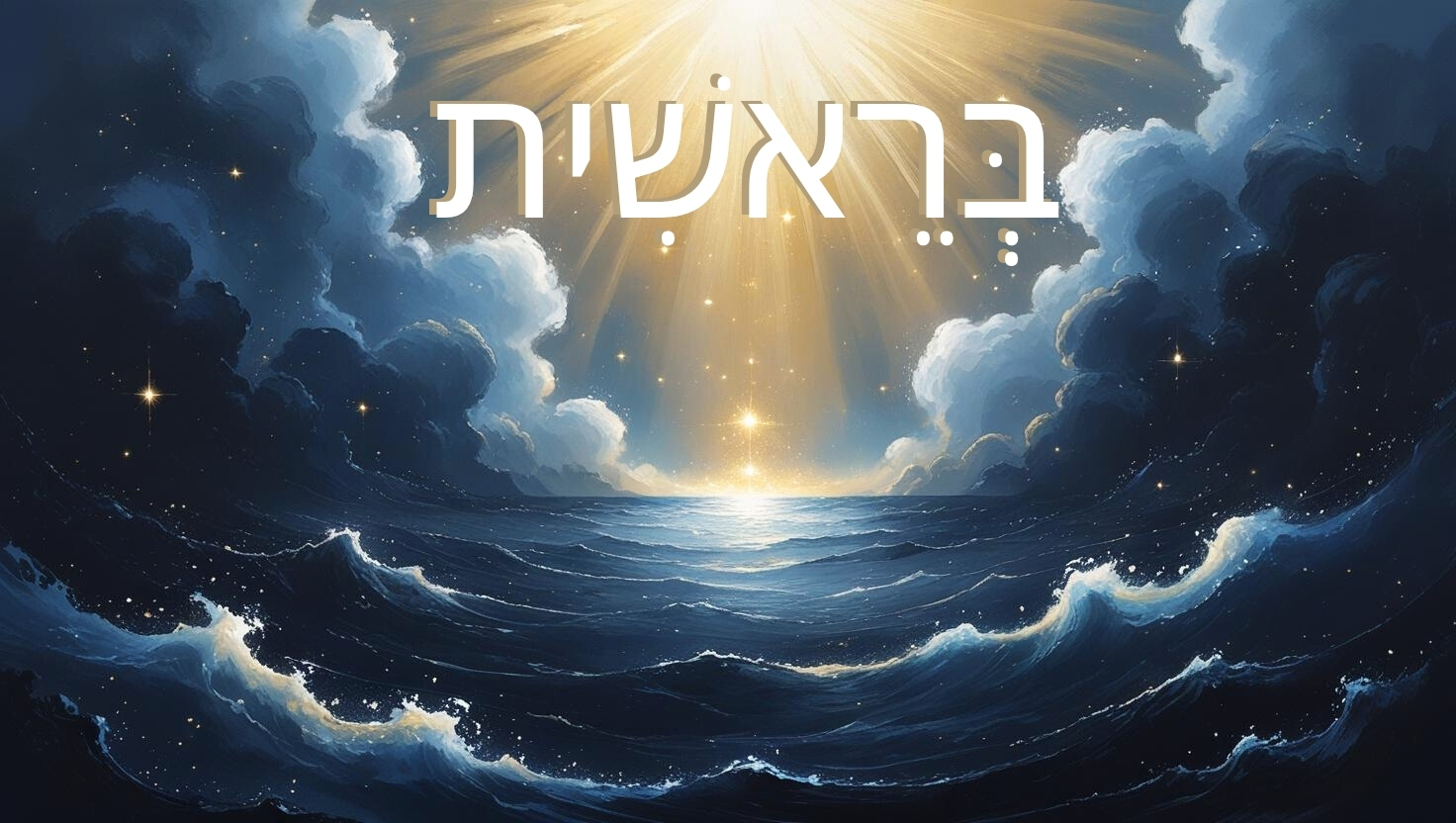
“In the Beginning” vs. “When God Began”
As much as the pandemic was the pandemic (and I know I don’t need to be descript about it) It had its moments. One moment that really stands out for me was when I stumbled upon a video by a biblical scholar on TikTok named Dan McCallan. He created a video exploring the first line of Genesis, claiming it’s one of the most mistranslated sentences in the entire Bible.
I found it fascinating, especially as someone who wasn’t raised with any kind of religious background. In many ways, I think that was to my advantage. My father has occasionally expressed regret that we didn’t grow up going to church every Sunday. But honestly, there’s a strange relief in not needing to pretend our home was something sacred when, in truth, it was far from it. Not being part of that particular illusion felt, in its own way, like a kind of honesty.
I suppose this made me a little bit more open to hearing what Dan had to say. As you can imagine, his scholarly interpretation comes with much backlash and controversy.
However, the way in which he describes it makes a whole lot more sense to me than what is usually said about the opening line of the book of Genesis which is “In the Beginning.” So, I felt compelled to do a bit more research into this and write about it.
When God Began
The first line more accurately says something like “In beginning, God created the heavens and the earth.” There is no little word “the” before “beginning” in the original Hebrew text. So, a super-literal translation would be “In a beginning” or even “When God began.” It is to my understand that Hebrew sometimes leaves out words like “the” that English needs.
About 2,300 years ago, Jewish scholars in Alexandria, Egypt, translated the Hebrew Bible into Greek. A majority of people read their translation as “in the beginning” (with “the”). Because early Christians used that Greek version, everyone came to know Genesis 1:1 with “the” already in place. Later, when this Greek form was turned into Latin (“In principio”), it also used “the”. The idea of “the beginning” got even stronger.
By the time it was translated into English, “In the beginning” was already how people knew the story started. So, instead of going back to Hebrew and changing it, they kept the familiar “In the beginning”.
Today
Today, we know the original Hebrew didn’t include the word “the.” Some newer translations now say “When God began” or “In a beginning” to be closer to Hebrew. These versions help us see that the Hebrew translation might have meant something like “as the first action happened”. So instead of saying “this was the exact moment everything began,” it’s possible that what was really meant to be said was something like “when God came upon this chaotic part of existence, he started shaping it.”
Another way to look at this is by reading Genesis 1:1 together with verse 2. Verse 2 says, “the earth was formless and empty, and darkness was over the surface of the deep, and God’s Spirit was hovering over the waters.” Some scholars say that if Genesis 1:1 is translated as “When God began to create the heavens and the earth,” then the two verses form one continuous thought:
“When God began to create the heavens and the earth, the earth was formless and empty”.
In other words, creation didn’t start from nothing. It is possible that God came upon a watery mess, or something called a “primordial chaotic beginning”. This means that, at first, everything was jumbled and watery and needed to be sorted. God’s first creative act was to separate light from darkness, land from water, and so on. By reading it this way, Genesis isn’t about God creating out of nothing. It’s about God bringing order and purpose to this particular chaos.
Conclusion
I think the thing I like about When God Began is that it more easily invites us to wonder: What was it like before anything (that we know of) existed? It asks us to think about beginnings in a very real sense, before space, before time, before matter. It doesn’t assume a specific belief system; instead, it opens the door to thinking about existence from a broader perspective. It’s a reminder that there was a point, if you can even call it that, before the world began, and that’s a concept we rarely pause to consider.




Leave a Reply