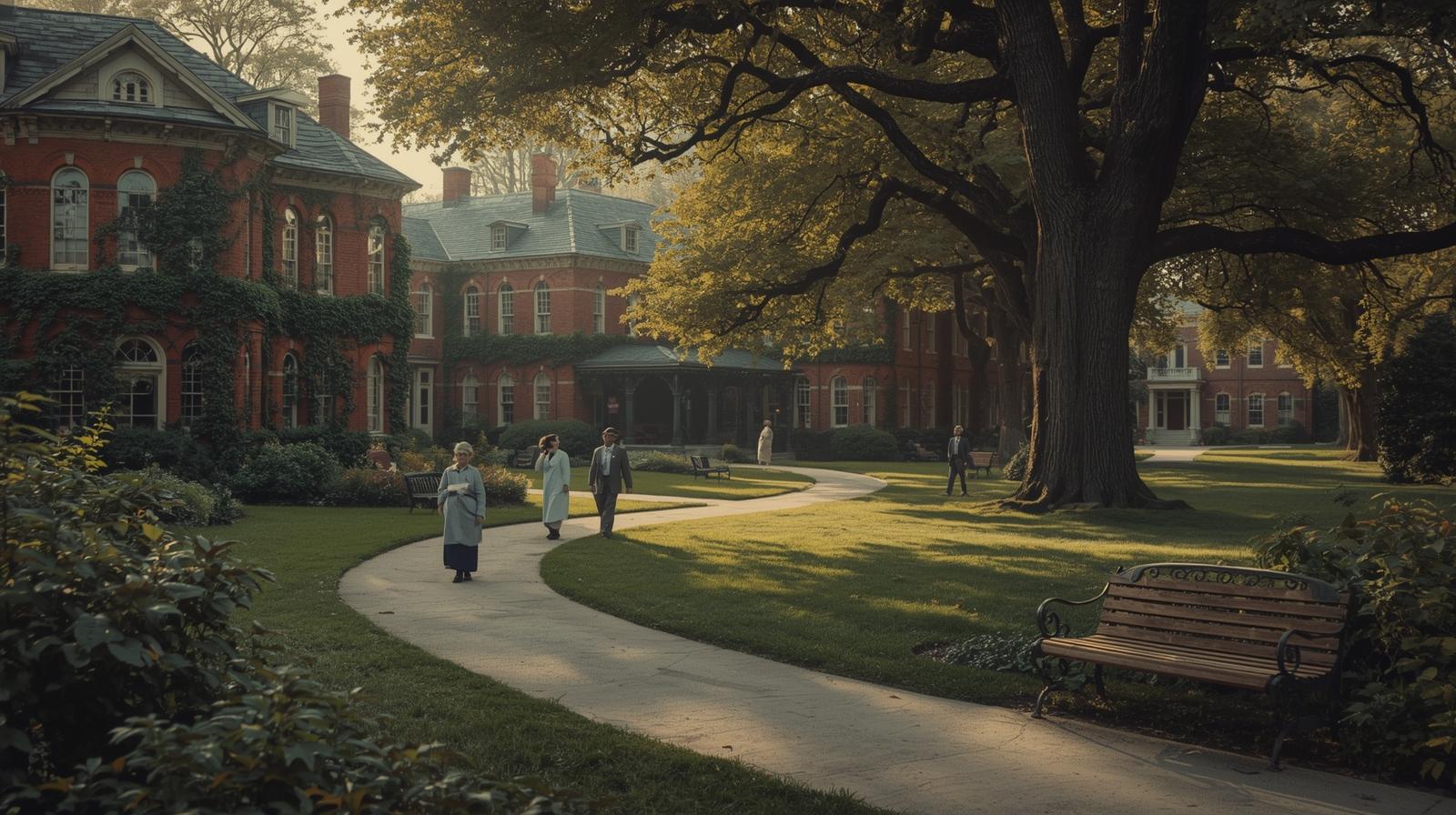
The Still-Hildreth Osteopathic Sanatorium: A Forgotten and Radically Different Mental Health Facility
The Still-Hildreth Osteopathic Sanatorium (later known as the Still-Hildreth Osteopathic Hospital) was an alternative mental-health treatment facility located in Macon, Missouri. It was founded in 1914 by Dr. Arthur Hildreth and closely associated with the Still family (a family that were pioneers of osteopathic medicine in the United States).
It became the first and most prominent osteopathic institution dedicated to treating mental and nervous system disorders through osteopathic principles. This was during a time when many psychiatric hospitals relied on harsh and invasive procedures such as electroconvulsive therapy, insulin-shock therapy, Metrazol-induced seizures, and lobotomies.
Still-Hildreth emphasized a gentler, holistic methods aimed at restoring balance to the body and nervous system. This was unheard of at the time and is still quite rare even by today’s standards.
Unusually Large Staff
SHS employed a large, diverse staff which consisted of physicians, nurses, attendants, therapists, dietitians, and even crafts and recreation instructors. A larger staff allowed for more individualized attention and round-the-clock monitoring without overworking personnel, something that was severely lacking in most mental institutions of the time and that seems to still be lacking even today. Osteopathic care required hands-on treatment, which meant higher staff-to-patient ratios were essential.
Accounts from osteopathic archives describe the therapeutic atmosphere as more like a restorative retreat than an asylum. The emphasis was on engagement over restraint, not isolation. Patients engaged in activities, manual therapy, and time outdoors. This gentler culture likely benefited both patients and staff morale.
Unfortunately, the very large staff that made Still-Hildreth’s care so effective also contributed to its closure. This is regrettable, as patient outcomes there showed measurable success.
Treatments at Still-Hildreth
Still-Hildreth’s treatment approach was far ahead of its time. It offered cutting-edge, nature-based therapies and incorporated several unique therapeutic devices that were innovative for the era, many of which are now forgotten and were misunderstood then, and now.
Below is an overview of the core therapies and instruments they utilized:
1. Osteopathic Manipulative Treatment (OMT)
OMT involved hands-on techniques to improve circulation, reduce tension, and stimulate the body’s natural healing systems. Mainstream medical doctors (MDs) in the early-to-mid 20th century rarely used OMT. Instead, osteopathic physicians primarily practiced it, despite being marginalized by allopathic medical establishments.
Still-Hildreth was unique because it was entirely osteopathic, making OMT a central component of mental health care, not a supplementary therapy. It was very rare at this time to incorporate OMT in a mental health care facility. Practitioners believed OMT helped regulate the nervous system and enhance mental clarity and emotional resilience. Patients with anxiety, depression, and even psychotic symptoms received routine manipulation to restore physical and energetic balance.
2. Psychotherapy & Talk Therapy
Still-Hildreth adopted psychotherapy well before it was standard in institutional mental health care. Individual and group therapy allowed patients to process trauma, develop insight, and build relationships. The emphasis was on understanding the person, not just managing the symptoms.
3. Nutritional Therapy & Dietary Regulation
Nutrition was central to treatment, with patients receiving customized meal plans based on individual needs. The belief was that food directly affected mental and physical well-being. This is an idea that is now a cornerstone of functional and integrative medicine.
4. Rest, Routine & Therapeutic Environment
The hospital structured patient days with regular routines, meaningful activities, and designated times for rest. This created a stabilizing, trauma-informed atmosphere, allowing patients to heal in an environment free from chaos or overstimulation. Staff encouraged activities such as gardening, journaling, reading, and walking.
5. Hydrotherapy
Though documentation remains limited, the hospital likely used warm baths, cold compresses, and whirlpool sessions to promote calm, support detoxification, and encourage relaxation. Especially useful for patients in states of agitation or emotional overwhelm.
6. Minimal Pharmacological Use
Medications were used often as a last resort. The preference was for natural, supportive therapies, believing the body could self-regulate when given the right environment and inputs. This stood in stark contrast to the pharmaceutical-heavy approach that would dominate psychiatry in the decades to follow.
7. Spiritual Considerations
Spirituality was treated as a valid component of health, especially influenced by Edgar Cayce’s holistic teachings. Patients were encouraged to pray, meditate, or reflect, regardless of religious background. The hospital embraced the mind-body-spirit connection as an integral part of healing. Edgar Cayce often recommended the Still-Hildreth Sanatorium in his health readings for individuals suffering from mental health disorders. Unfortunately, many of his recommendations were not followed, primarily due to the high cost of treatment.
8. Wet Batteries (Wet Cells) & Radiac Units (Radial Appliances)
Edgar Cayce frequently referenced Still-Hildreth in his readings starting in the late 1930’s and before Cayce’s passing in 1945. Cayce, known for offering alternative health advice in trance states, seemed to view the hospital as a beacon of integrative medicine, a place aligned with his ideals of mind-body healing.
His endorsements helped draw attention to the facility from individuals seeking treatments beyond what conventional medicine could offer, reinforcing Still-Hildreth’s reputation as a progressive and spiritually conscious institution.
Based on Cayce’s energy medicine readings, wet batteries were small devices that produced gentle electrical currents to stimulate the body’s glandular and nervous systems. It is believed to enhance detoxification, circulation, and nerve function, particularly for patients with depression, fatigue, or endocrine imbalance. If you want to know more about this technology, visit Baar Products.
The Radiac was a passive energy balancing device used to reset the body’s energetic field. Often paired with meditation or rest, it was believed to calm the nervous system, enhance spiritual alignment, and support emotional balance. While scientifically unproven, many patients and practitioners reported improvements after use. If you want to know more, click here (also Baar Products).
Hensel, K. L., & Zarbock, S. F. (2014). The Still-Hildreth Sanatorium: An Osteopathic Approach to Mental Health. AAO Journal, 24(3), 10–18.
Statistics
Between 1914 and 1930, SHS admitted nearly 1,900 patients, most (about 88%) for psychiatric or neuropsychiatric disorders such as schizophrenia (then called dementia praecox), bipolar disorder, anxiety, and dementia. In the late 1920s, the sanatorium published a promotional pamphlet reporting recovery outcomes for these conditions.
In 2014, an article was published by the AAO Journal, in which the authors reviewed the surviving hospital records and compared them with the figures printed in that pamphlet. The table below shows the results of that comparison.
The “Difference” column shows how much the two sets of numbers vary, revealing that the pamphlet’s reported recovery rates were generally higher than what was found in the surviving documentation. However, this difference likely reflects the fact that not all of the original SHS records survived, and that some of the remaining charts were incomplete. As a result, the 2014 analysis could only review a portion of the total patient cases, meaning the discrepancies are partly due to missing data and changes in how “recovery” was defined rather than there being intentional exaggeration.
| Diagnosis | Pamphlet Data (1920s) Patients Listed | Pamphlet Data (1920s) Reported “Recovered” | Records Reviewed (2014 Study) Surviving Charts | Records Reviewed (2014 Study) Marked “Recovered” | Difference Between Pamphlet & Records |
|---|---|---|---|---|---|
| Bipolar Disorder (Manic-Depressive Psychosis) | 713 | 66% | 357 | 51% | 15% |
| Toxic Psychosis | 43 | 95% | 16 | 88% | 7% |
| Infection or Exhaustion Psychosis | 64 | 95% | 37 | 76% | 19% |
| Presenile Psychosis | 16 | 55% | 3 | 100% | 45% |
| Psychoneuroses (Anxiety, Stress-Related) | 232 | 77% | 7 | 57% | 20% |
| Traumatic Psychosis | 4 | 100% | 3 | 100% | 0% |
| Total (Psychiatric Diagnoses Only) | 1,989 | 55% | 1,668 | 34% | 21% |
Sidenote
For the life of me, I searched endlessly on the internet for a picture of the pamphlet mentioned in this research paper. When I did more research into SHS (due to being interested in Edgar Cayce) I saw and very vividly remember pictures of it. But that was also over 10 years ago. The only thing I could find was a picture you can purchase of a postcard from Digital Common of Kansas City. It contains some statistics. It is not dated so it’s hard to say when it was created or how relevant it is. Link: “Still-Hildreth Osteopathic Sanatorium, Macon, Missouri” by Still-Hildreth Osteopathic Sanatorium
Other Statistics
While it is somewhat discouraging that the authors of the AAO Journal article were unable to access all of the original SHS patient records, they explored other compelling statistical comparisons originally conducted by Fred M. Still, D.O. (the medical director and co-founder of the Still-Hildreth Sanatorium) from 1933.
Still analyzed outcomes for 1,002 patients diagnosed with schizophrenia who were treated at SHS between 1914 and 1930. He compared their results to those of 242 patients treated at the Colorado Psychopathic Hospital (CPH), a conventional allopathic institution. Still’s review found a total recovery rate of 35 % at SHS compared with 3 % at CPH.
The table is broken down in subtypes of schizophrenia: hebephrenia (36 % vs 8 %), catatonia (44 % vs 18 %), and paranoia (26 % vs 0 %). At the time, “recovery” was defined as the patient’s ability to return home and reintegrate into everyday life.
| Outcome | Still-Hildreth (SHS) | Colorado Psych Hospital (CPH) |
|---|---|---|
| Recovery from Hebephrenia | 36% | 8% |
| Recovery from Catatonia | 44% | 18% |
| Recovery from Paranoia | 26% | 0% |
| Total Recovery | 35% | 3% |
A Deeper Take on The Statistics
The numbers show that using osteopathic and holistic care could actually help people with mental health problems get better results. When you compare the data, it gives a new way to look at the first table. Even though some of the hospital’s old records were lost and the recovery rates look lower, they’re still much stronger than the 3% recovery rate at the Colorado Psychopathic Hospital. It’s also important to remember that the Colorado hospital’s data came from only 242 patients, while Still-Hildreth had 1,002, which makes its results more reliable.
Of course, comparing the two hospitals isn’t completely fair. They treated different types of patients and kept records in different ways. So, while the numbers suggest that Still-Hildreth’s approach may have led to better outcomes, the data should be seen as a sign of potential success rather than absolute proof.
The Fall: Financial Struggles and Medical Politics
Despite its innovative approach, Still-Hildreth eventually went bankrupt in 1968 after 34 years of operation. Rising staffing costs and a changing medical landscape, marked by declining support for osteopathic psychiatry, led to its closure.
As Western medicine began to favor pharmaceutical solutions and faster, more “efficient” (and often impersonal) treatments, the osteopathic approach faced increasing marginalization. Osteopaths, once seen as pioneers of holistic healing, were gradually disappearing due to a system that prioritized profit and standardization over individualized care. Some suggest that osteopathic physicians themselves “sold out,” aligning with pharmaceutical and insurance interests rather than upholding their original holistic ethos.
Conclusion
Few people know the story of the Still-Hildreth Osteopathic Hospital. In many ways, it feels like one of mental health’s best-kept secrets. A facility that provided care for people in ways that were decades ahead of its time.
As today’s conversations around mental health evolve and integrative approaches gain traction, we can look to the legacy of Still-Hildreth, a place that treated the mind, body, and spirit as one.
The Still-Hildreth Sanatorium: A History and Chart Review – OSTMED-DR –
AAO Jounral_Dec2014.pdf (starts on page 14)


Leave a Reply