The Richard Ramirez Story: A Tragic Blueprint of Violence and Circumstance
In the 1970s and 1980s there was a bizarre golden age of serial killers. Ted Bundy, Jeffrey Dahmer, John Wayne Gacy were killers that eventually got caught somewhat early on in their killing sprees. Others, including Gary Ridgway and Lonnie David Franklin, were active during the same period but weren’t convicted until much later. These people have become the subjects of countless true crime stories and documentaries.
When looking into the histories of all of these individuals, it reveals that many shared certain similarities. Traumatic head injuries at a very young age, fractured family dynamics, and major neglect during their childhoods.
John Wayne Gacy was knocked unconscious by a swing as a child. Years later when he was a teenager, he was diagnosed with a blood clot in his brain. His parents never took his continued health issues seriously. Jeffrey Dahmer suffered a head injury after falling off a bicycle at age six. His mother also took multiple kinds of prescribed drugs while pregnant with him. Ted Bundy’s early life was clouded in secrecy. He was raised believing his mother was his sister. There were also strange rumors that his abusive grandfather might have been his biological father. (DNA tests proved this to be false).
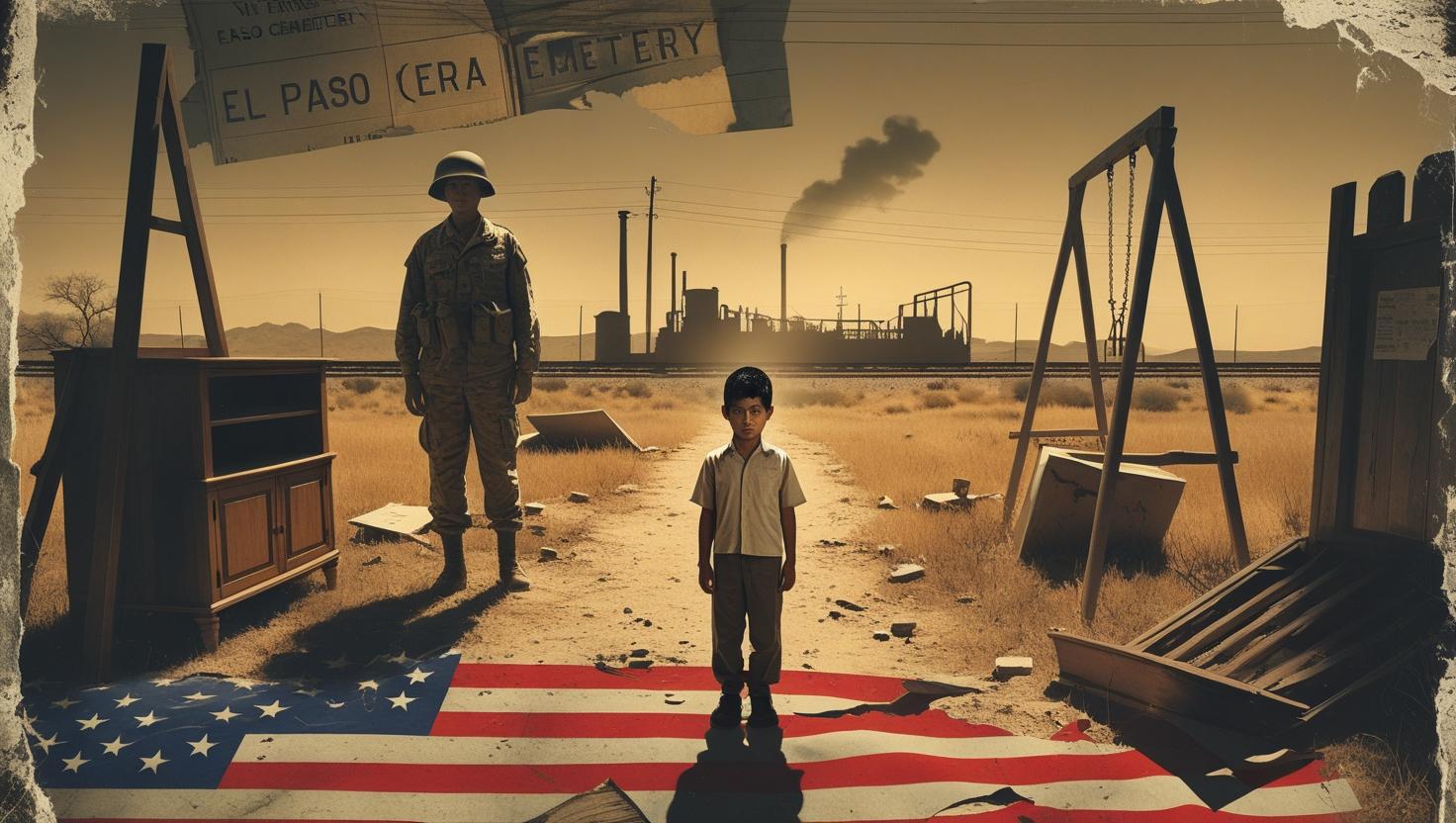
Richard Ramirez, also known as the “Night Stalker,” shares many of these traits. At age 2, he had a serious head injury when a dresser fell on him which left him unconscious. There are also reports suggesting that he sustained even more head injuries all throughout his childhood, some resulting from physical abuse by his father, and others from accidents, such as being struck in the head by a swing (weirdly, just like John Wayne Gacy).
But Richard’s story is a lot more complex the more you look into it.
Early Family History and Migration
Richard was born in El Paso, Texas, in 1960. His parents, Julian and Mercedes Ramirez, were Mexican immigrants who came to the U.S. They most likely were brought to the US due to a labor agreement. The agreement brought workers to fill jobs in the USA in infrastructure and agriculture. Julian had previously served as a police officer in Juárez, Mexico. But despite the authority of that role, economic conditions forced him to leave. He ended up working for the Santa Fe Railroad in what was supposed to be a promising new life. It wasn’t.
His mother, Mercedes, worked long hours in a boot factory under harsh and unsafe conditions for very little pay. During her pregnancy with Richard, she was regularly exposed to toxic chemical fumes, a risk that not only endangered her health but may have impacted Richard’s neurological development before he was even born.
By the time Richard was just two years old, he already had a serious head injury from the dresser fall. But in addition to that, he also witnessed a fatal stabbing. The details of this are very vague but it was something that was mentioned by Richard to Psychiatrist he worked with after his arrest.
Richard’s father was strict, volatile, and physically abusive. He suffered from alcoholism and could be explosive with his anger. In Richards teenage years, the violence escalated to the point where Richard began sleeping in a nearby cemetery to escape. When Julian discovered what his son had been doing, he punished Richard by tying him to a crucifix.
But what may have ultimately sealed Richard’s psychological fracture was his relationship with Miguel (“Mike”) Ramirez, his older cousin and a Vietnam War veteran.
The Wider Systemic Web
Mike returned from Vietnam, he, like many others, brought the war home with him. Many working-class veterans, especially men of color, came back with little support or rehabilitation. He was suffering from what we now recognize as post-traumatic stress disorder (PTSD). But in the 1970s, that label barely existed in public consciousness, and treatment was even more rare.
Vietnam was a war that disproportionately drafted poor people and people of color. According to historical data:
- Around 11% of the U.S. population was Black during the Vietnam War era, but more than 16% of American troops in Vietnam were Black.
- Latino soldiers were also overrepresented, particularly in combat roles. In some areas of the Southwest U.S., such as Texas and California, Latinos made up 20-25% of local drafts despite being a smaller portion of the population.
- Poor white Americans were also heavily represented among those sent to Vietnam, though their economic hardships were less often highlighted. They made up a significant portion of draftees due to limited access to deferments.
Meanwhile, young white men from privileged families were likely to avoid combat through college deferments, medical exemptions, or placements in the National Guard. Even within the military itself, Black and Latino soldiers were underrepresented in officer ranks and overrepresented in low-ranking, high-risk positions. The burden of war fell squarely on those already disadvantaged. And when it was over, they returned to the same poverty, racism, and neglect they had left behind.
It Gets Worse
When Richard was just 12 years old, Mike showed him graphic photographs of mutilated women he claimed to have raped and killed during his time in Vietnam. Richard said he was intrigued by what he saw. He Explained to psychiatrists that it was like a sort of fascination. Mike also trained Richard in military-style tactics.
When Richard was just 13 years old, he witnessed Mike shooting his wife in the face. She died instantly. Richard didn’t run. He didn’t scream. He later admitted that what he felt in that moment wasn’t horror, it was fascination. A strange sense of intrigue. Mike did go to trial for what happened but was ultimately found not guilty by reason of insanity. Instead of serving prison time, he was committed to a state mental health facility. He was released a few years later, according to sources, and upon returning, he and Richard resumed their relationship.
But on top of everything else, another male relative, reportedly an uncle, involved him in “peeping tom” type activities at still such a young age. They would go out at night to spy on women through their windows.
Richards Crimes
Richard Ramirez’s crimes began in 1984 in California. In just over a year, he murdered at least 13 people. He was also linked to numerous other assaults, attempted murders, and burglaries. His attacks targeted both men and women of various ages and backgrounds. He often broke into homes late at night, using a combination of stabbing, shooting, and bludgeoning to kill his victims. He also incorporated elements of Satanism into his crimes. Many of his deadly actions were tactics he learned from his cousin Mike.
His inconsistent choice of victims and methods created confusion for investigators. His ability to evade law enforcement for so long was due in part to his mobility, lack of a clear profile, and his attacks across different jurisdictions.
Ramirez was eventually caught on August 31, 1985. A group of citizens in East Los Angeles recognized him and chased him down, detaining him until police arrived. In 1989, he was convicted of 13 counts of murder and sentenced to death. He remained on death row at San Quentin State Prison for more than two decades before dying of complications related to B-cell lymphoma in 2013. Believe it or not, Richard had many women interested in him and he did eventually get married while serving his sentence.
Personal Responsibility
I feel a personal responsibility to name this for what it is.
I was born into privilege. This helped to keep people in my family out of this particular war while others were pulled directly into it. My father was in college during the Vietnam War which meant that he was automatically deferred. The truth is, my life is certainly better because of that.
My father had already had a drinking problem in his youth and all throughout my childhood. I often wonder what might have happened if he had been drafted. What if he had come back carrying the same kind of trauma or exposed to the same kind of insanity that Mike had? How much worse would things have been? Who would I have become?
I’m not saying this to elevate myself. I say it because if you’re born into a system that shields you from its worst consequences while it doesn’t do that for others, you need to speak about it, clearly, unapologetically. Privilege shouldn’t let you stay silent.
Richard Ramirez was born into a reality that many people like me were spared from ever having to face. If we want to understand how people like him come to exist, we have to stop pretending that violence starts with the individual. That’s why telling Richard Ramirez’s story isn’t about morbid fascination, it’s about confronting the uncomfortable truth that systems shape people long before choices do. Naming those systems is the first step toward doing better.
Serial Killers, Angulimala, & the Divine Light of the Human Spirit | by Keith Gilmore | Medium




Leave a Reply