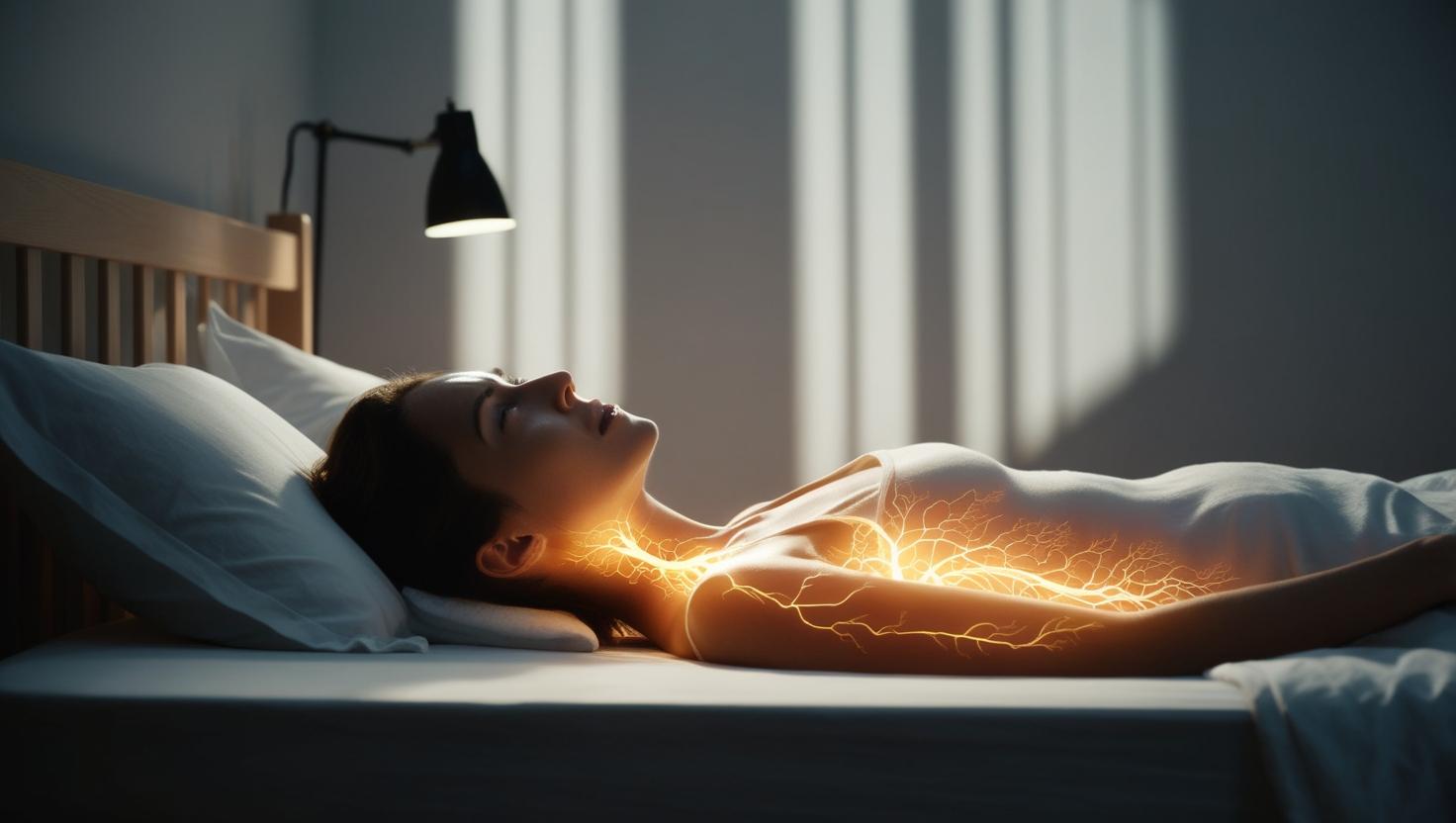
The Strange Reality of Feeling Worse When I Rest
Have you ever felt worse when you’ve tried resting or relaxing? It’s really hard to explain and it’s taken me a long time to finally understand this, but I wanted to share what I have been learning about this strange reality of mine.
If your body is struggling to relax, it’s possible that there might be some kind of confusion happening within your nervous system. I am very much simplifying this, but it’s accurate. Relaxation is supposed to help us recharge. But for me (and maybe for others out there) trying to rest triggers a wave of distressing symptoms instead.
If you’ve tried doing techniques that encourages relaxation and you start to experience things like heart palpitations, muscle spasms, trembling, or unease, this strange reaction is often linked to nervous system dysregulation.
The autonomic nervous system has two parts, the Sympathetic Nervous System (“fight-or-flight” system), and the Parasympathetic Nervous System (“rest-and-digest” system). In a system that is well-regulated, these systems operate harmoniously. They help you shift from stress to rest.
But if your system is severely dysregulated, that transition can become extremely chaotic.
Connecting to the Past
It seems that my body may have learned to associate relaxation with danger.
My childhood provides some clues. At age two, I fell off a bunk bed in my sleep and landed face-first on the floor. That trauma occurred while I was in a deep sleep. I now believe that event taught my body that stillness equals danger. I’ve come to recall that most of the sleep I had while growing up was incredibly shallow, almost hypervigilant. I can recall times in my youth being so tired thinking that I would fall asleep right away, but I would stay in this odd sleep where I was tired, but still aware of everything going on.
How It Might Show Up
In conditions involving autonomic dysfunction, the body struggles to regulate certain bodily functions like heart rate, blood pressure, and muscle tone. Here are a few ways this can manifest:
1. Rebound Effect
When the body stays stuck in “on” mode, sudden stillness can feel foreign and threatening, triggering a resurgence of symptoms. This happened to me constantly.
(Here’s a great article about rebound anxiety.)
2. Circulatory Shifts
During my worst periods, I experienced major circulatory changes. Simply lying down or slowing my breath would shift my blood pressure and circulation in a way that triggered dizziness, tingling, or a floating sensation. Sometimes, I felt nauseous just from changing positions in bed. (For more on this, check out this POTS article from KidsHealth.)
3. Sensory Overload
When you stop and tune in, you may suddenly become aware of all the discomfort you’ve been avoiding. Muscle tightness, nerve pain, digestive issues. They can all become more noticeable when the mind quiets down.
What Can Help
If you’re experiencing this, it’s possible that it is a sign that your body needs to relearn safety around rest. Pushing through the discomfort won’t help. At least it hasn’t helped for me. Sometimes it often made everything worse. Here are a few techniques that have helped me:
- Grounding Techniques
Press your feet into the floor, feel a texture, or use sensory tools to anchor yourself in the present. - Don’t Force Relaxation
Try calming activities like gentle stretching, walking, coloring, or listening to soft music. If any of these start to make you feel strange, STOP. - Somatic Tools Like Havening
This technique has been a major part of my healing. Havening helps retrain the nervous system to associate stillness with safety.
Final Thoughts
If your body overreacts to stillness, it’s possible that it is a sign of nervous system confusion. I personally am still working through trying to teach my body and nervous system safety in being calm and relaxed. It’s important to honor your body’s pace. Healing doesn’t always look the way we expect it to, and that’s okay.
Healing is different for everyone. But for those of us with nervous system dysregulation; let’s just say that “different” might be putting it lightly…